
How to Choose the Right Footwear Hardware for Different Shoe Styles

Footwear hardware can be both a functional component and an important part of a shoe's overall design. Buckles, ornaments, chains, rhinestone accessories and other metal details can change the appearance of a shoe and help create a distinctive style.
For footwear brands, designers and manufacturers, choosing the right hardware is not simply about selecting an attractive accessory. The hardware should match the shoe style, proportions, materials and overall design concept.
1. Consider the Style of the Shoe
Different types of footwear often require different hardware designs.
For example:
-
High heels can use decorative buckles, rhinestone ornaments or refined metal details to complement an elegant design.
-
Sandals can incorporate small buckles, chains, charms or decorative ornaments.
-
Loafers and flats often work well with classic metal ornaments, bars or buckles.
-
Fashion boots can accommodate larger buckles, chains and structured metal decorations.
-
Minimalist footwear may benefit from simple shapes and clean metal finishes.
The hardware should work together with the shoe rather than overpower the overall design.
2. Choose Hardware Based on the Design Proportion
Size is an important consideration when selecting footwear hardware.
A large ornament can become the main visual element of a shoe, while a smaller component may be used as a subtle finishing detail.
Designers should consider the relationship between the hardware and:
-
The size of the shoe
-
The width of the strap or upper
-
The shape of the toe
-
Other decorative elements
-
The overall silhouette
Before production, a sample can help confirm whether the size and proportion work well on the finished shoe.
3. Match the Hardware to the Shoe Materials
The material and color of the shoe should also be considered.
For example, a polished metal finish may create a different effect on smooth leather compared with suede or textile materials.
Hardware can be developed in different finishes, including:
-
Gold
-
Silver
-
Rose gold
-
Gunmetal
-
Antique finishes
-
Customized colors
Matching the hardware finish with other components can create a more consistent appearance across the footwear design.
4. Use Decorative Hardware to Add a Design Detail
Footwear hardware does not always need to serve only a functional purpose.
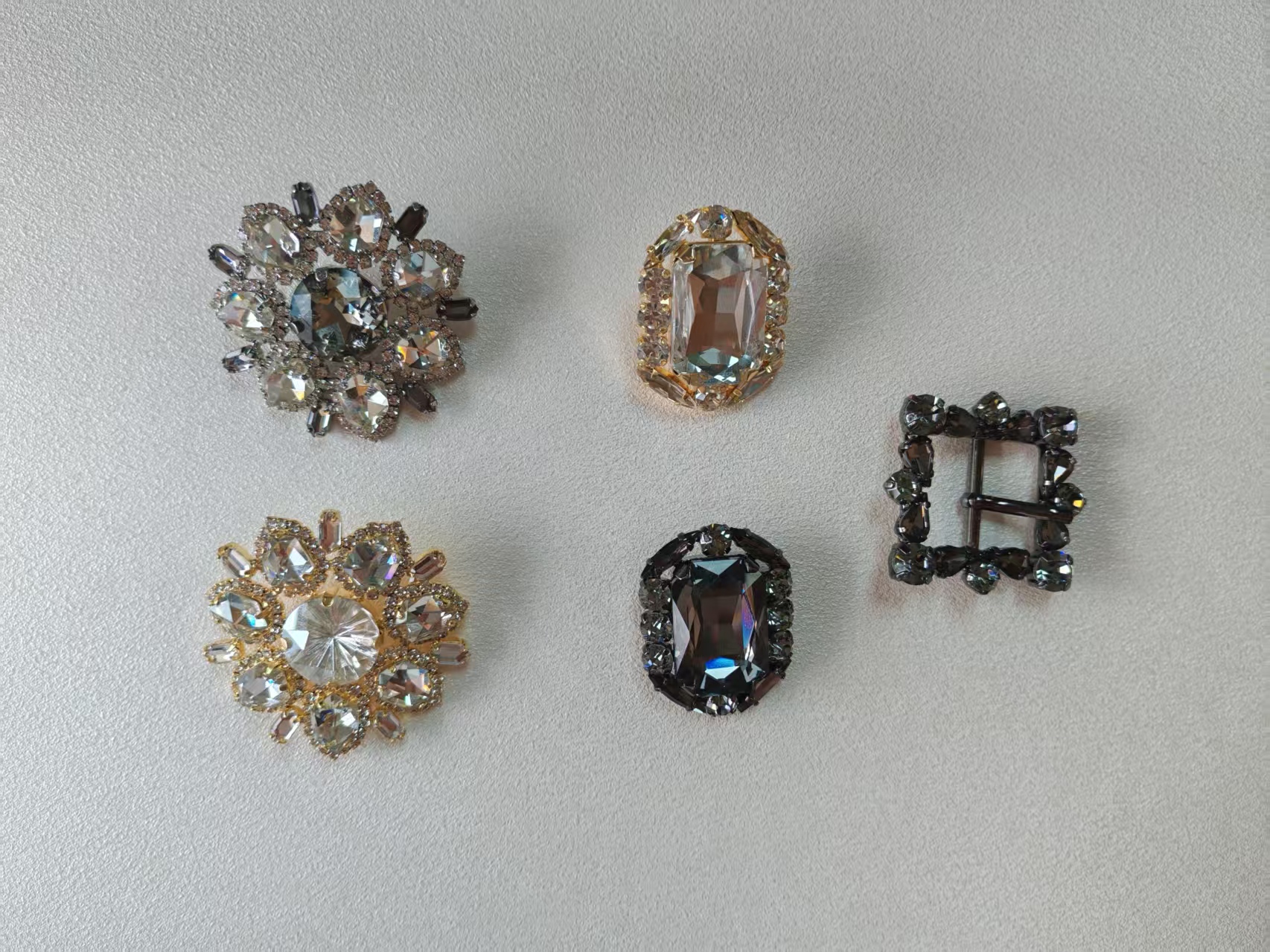
Decorative components such as rhinestone buckles, metal ornaments, chains and charms can be used to add visual interest to a footwear collection.
For brands developing distinctive styles, these components can also be customized in terms of:
-
Shape
-
Size
-
Color
-
Surface finish
-
Stone or crystal details
-
Brand-related elements
This gives designers more flexibility when developing new footwear collections.
5. Consider Function as Well as Appearance
A good footwear hardware design needs to work with the construction of the shoe.
Before selecting or developing a component, it is useful to consider:
-
How the hardware will be attached
-
The available installation space
-
The weight of the component
-
The required level of durability
-
How the hardware interacts with the shoe material
For functional buckles, the structure and attachment method are particularly important. For decorative components, the design should also allow secure and practical application.
6. When to Consider Custom Footwear Hardware
Standard hardware can be suitable for many footwear designs. However, custom development may be useful when a brand needs a particular shape, size, finish or decorative effect.
Custom footwear hardware can be developed from:
-
Designer sketches
-
Reference images
-
Existing samples
-
Specific size requirements
-
Brand design concepts
Working with a supplier during the development stage can also help identify potential production issues before moving to larger quantities.
7. Choose a Supplier With Development Capability
For footwear brands and manufacturers, the supplier's development capability can be just as important as the product itself.
An experienced shoe hardware supplier should be able to support different stages of development, from design communication and sampling to finishing and production.
Depending on the project, this may include:
-
Custom product development
-
Material and finish recommendations
-
Sample production
-
Size and structure adjustments
-
Surface finishing
-
Bulk production
A supplier familiar with footwear applications can also provide practical feedback on how a component can be used on the finished shoe.
Footwear Hardware for Brands, Designers and Manufacturers
SENHAO supplies footwear hardware and decorative components for footwear and fashion accessories.
Our product range includes shoe buckles, rhinestone accessories, metal ornaments, chains and other decorative hardware for different footwear styles.
We also support custom development based on customer designs, reference samples or specific product requirements.
From the initial concept to sample development and production, our goal is to provide footwear hardware that combines design flexibility with practical manufacturing requirements.
Conclusion
Choosing the right footwear hardware requires more than looking at the appearance of an individual component.
The shoe style, proportions, materials, finish, attachment method and overall design concept should all be considered before selecting a hardware component.
For brands and manufacturers developing new footwear collections, the right hardware can add an important design detail while supporting the overall look and function of the shoe.
When standard products do not meet the requirements of a particular design, custom footwear hardware provides another option for creating components specifically for the collection.
How Custom Handbag Hardware Enhances Fashion Brand Designs
SENHAO at Lineapelle Milano 2026: Footwear & Handbag Hardware
Related Article



Subscribe for Updates